 OBJECTIVE:
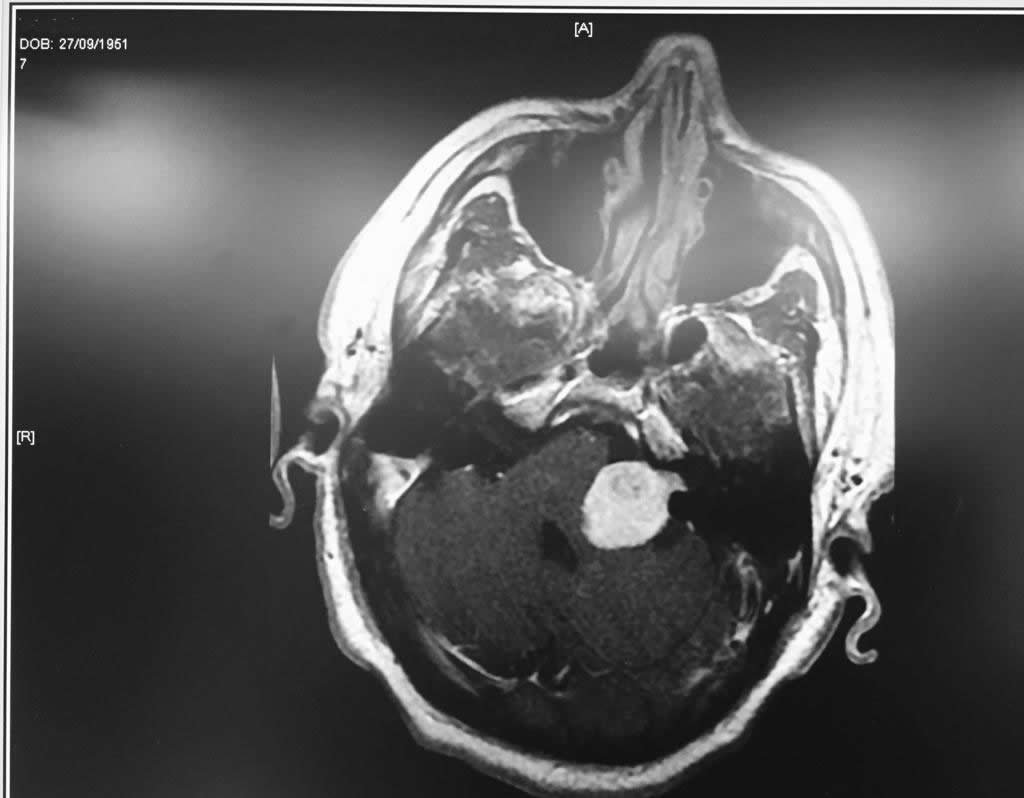
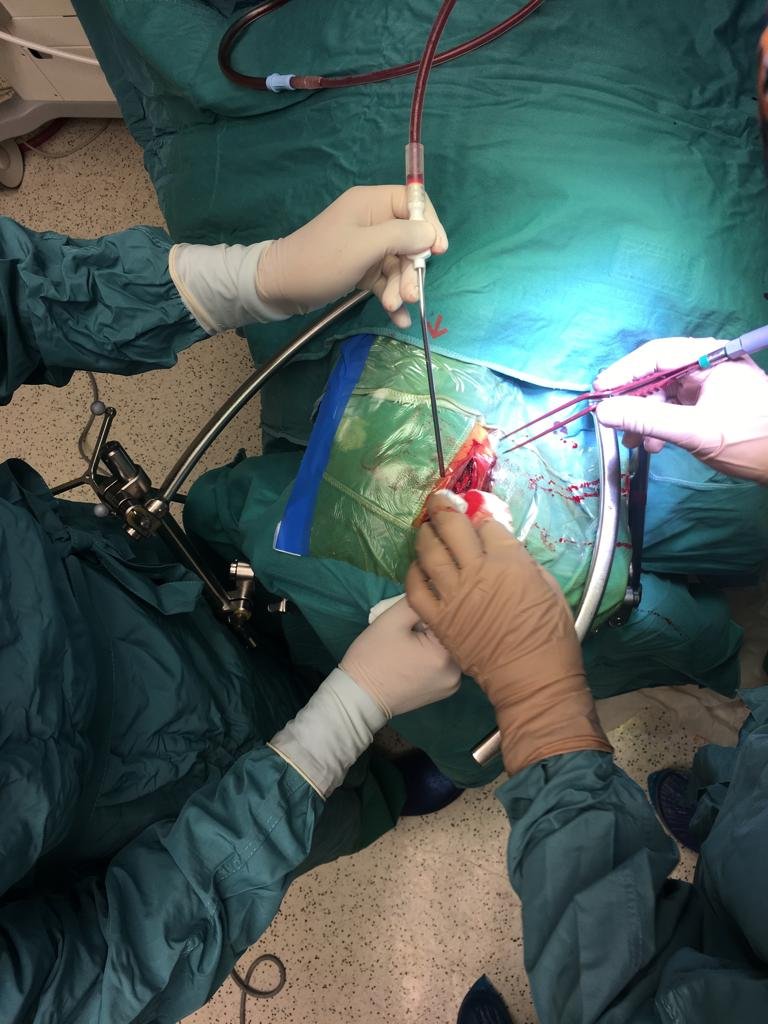
To investigate the variation in the position and course of facial nerve (FN) in patients undergoing vestibular schwannoma (VS) microsurgery by key-hole retrosigmoid approach and the relationship between its position and postoperative facial results.
METHODS:
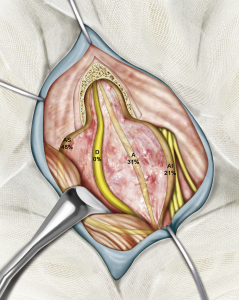
The series consists of 100 patients who underwent VS microsurgery during a 5-year period, in whom the position and course of the FN could be confirmed by direct stimulation. In relation to the position of FN, patients were classified into four groups: anterior (ventral) surface of the tumor (A), anterior-superior (AS), anterior-inferior (AI), and dorsal (D).
RESULTS:
The FN position and course was AS in 48 cases, A in 31, AI in 21 and D in zero. For tumors <1.5 cm, AS position was most common (68,4%). For tumors ≥1.5 cm, the proportion of A and AI increased (31,4% and 25,5%) respectively). Significant differences were observed between position and course patterns of the FN and postoperative nerve results: AS and AI had better House-Brackmann (HB) FN function in comparison to A group (p<0.05). Moreover, in tumors >3.0 cm, the FN had the tendency to adhere strongly to the tumor capsule, and postoperative facial deficit were more frequent (p<0.05).
The AS pattern was most common for smaller VS. The A position and course and adhesion of the nerve to the tumor capsule were the two factors most strongly associated with worst postoperative FN result.
References: